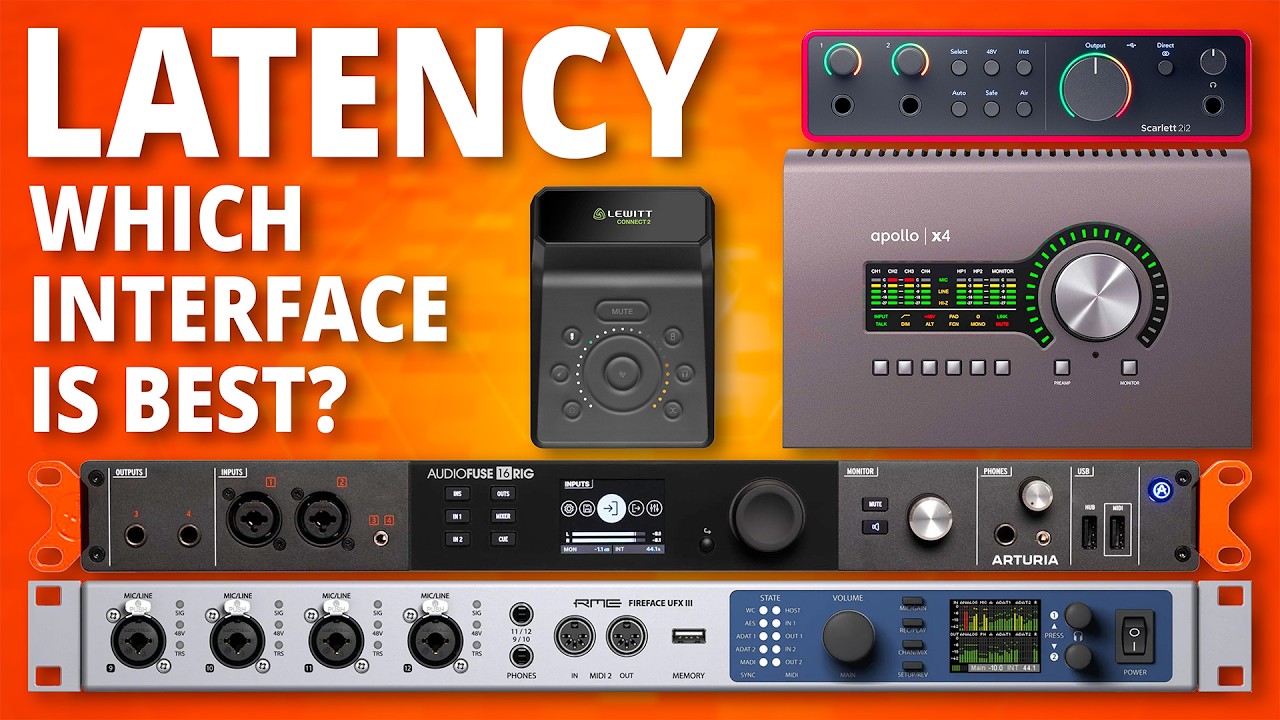
In this video, Guitar World Magazine’s 2020 Electric Guitarist of the Year, Igor Paspalj, explains the what is latency, what latency is acceptable for live use, and demonstrates how modern computers can achieve imperceptible latency and beautiful sound quality when using digital tools for music performance.
I have experienced latency in various weird ways and for weird reasons.
Different USB cables can have different latencies. I did not want to believe it either.
Some keyboards (probably older ones) have more latency with USB than 5-pin DIN. That was certainly the annoying case with my Casio PX-5S.
While the one-the-wire specs of USB show massively better bit rates than lowly old MIDI, sometimes the internal handling of USB bus signals on different devices is … non-musical, to put it lightly.
For years I had a setup like this:
Casio PX-5S - MIDI Out (5-Pin) ==>
MIDI In (5-Pin) - Arturia KeyLab mkII - USB-B to USB-C ==>
USB-C - MacBook Pro
I tried all kinds of combinations of cord types (USB-B to USB-A, USB-B to USB-C), cord brands (ULine, etc.), into various kinds of USB hub dongles that supported USB 2.0, 3.0, 3.1, USB-C, Thunderbolt, etc.
I eventually discovered that the closest I could get my Casio PX-5S to feeling right was to use my old MIDI cables (literally old, from 1986) and pass that MIDI through my other keyboard controller. It made no sense, but it worked.
I say all that to let you know that it’s a good idea to experiment, even when you think something shouldn’t work. MIDI 5-Pin should be much slower and latent. USB cords should be fungible. I’ve learned to question all assumptions when it comes to this stuff.
I use the audio interface of my CP88 for live performance with Gig Performer (only piano sound Ultimate Piano HD in Kontakt).
Be careful, if you plug the CP88 with :
USB-B <<---->> USB-A, the processing latency is 3.6ms.
USB-B <<---->> USB-C, the processing latency is 2.5ms.
The final latency result with Gig Performer in my MacBook Pro M1 Max :