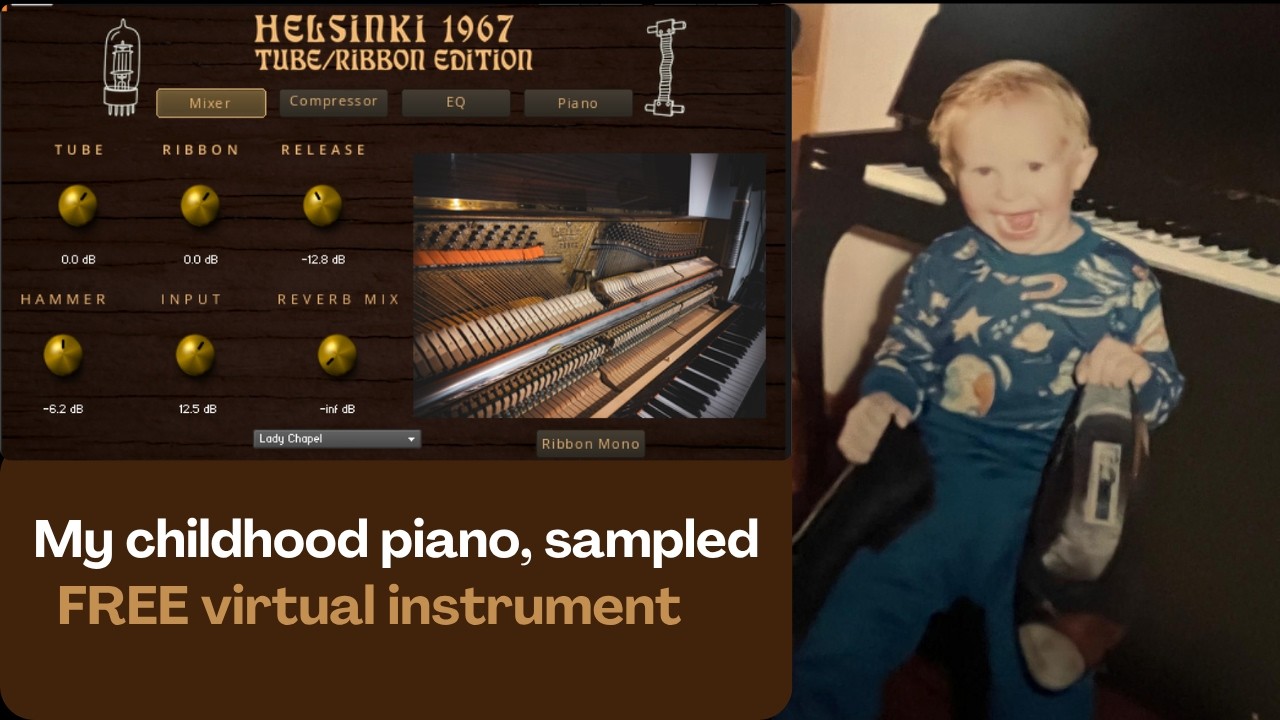
A totally newly sampled edition of the Helsinki 1967 small upright is now live and available. I made a launch video to tell a little bit about the history of the instrument.
Download links available on my website:
Soon to be available on Pianobook!
Current formats:
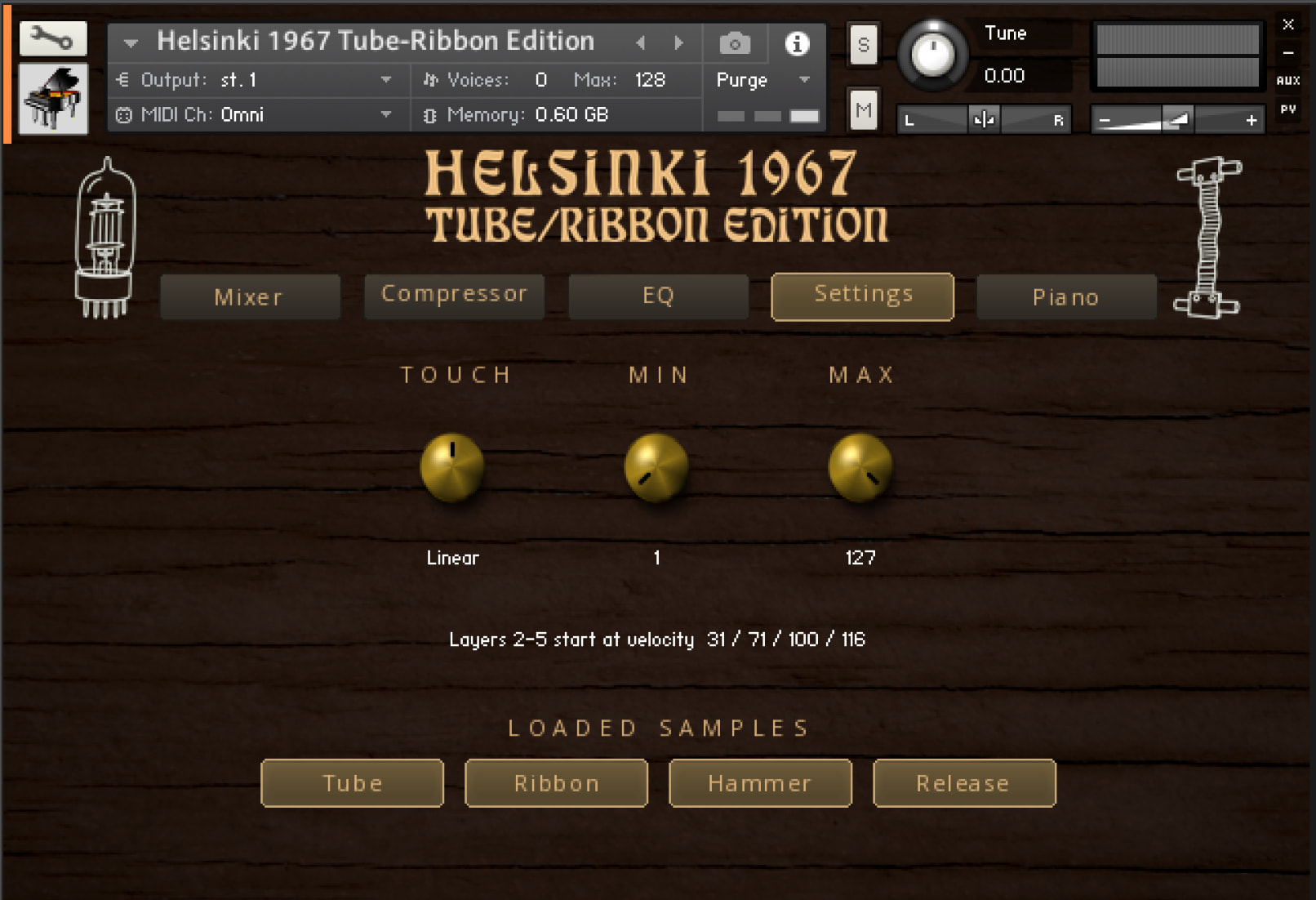
Kontakt (7 upwards)
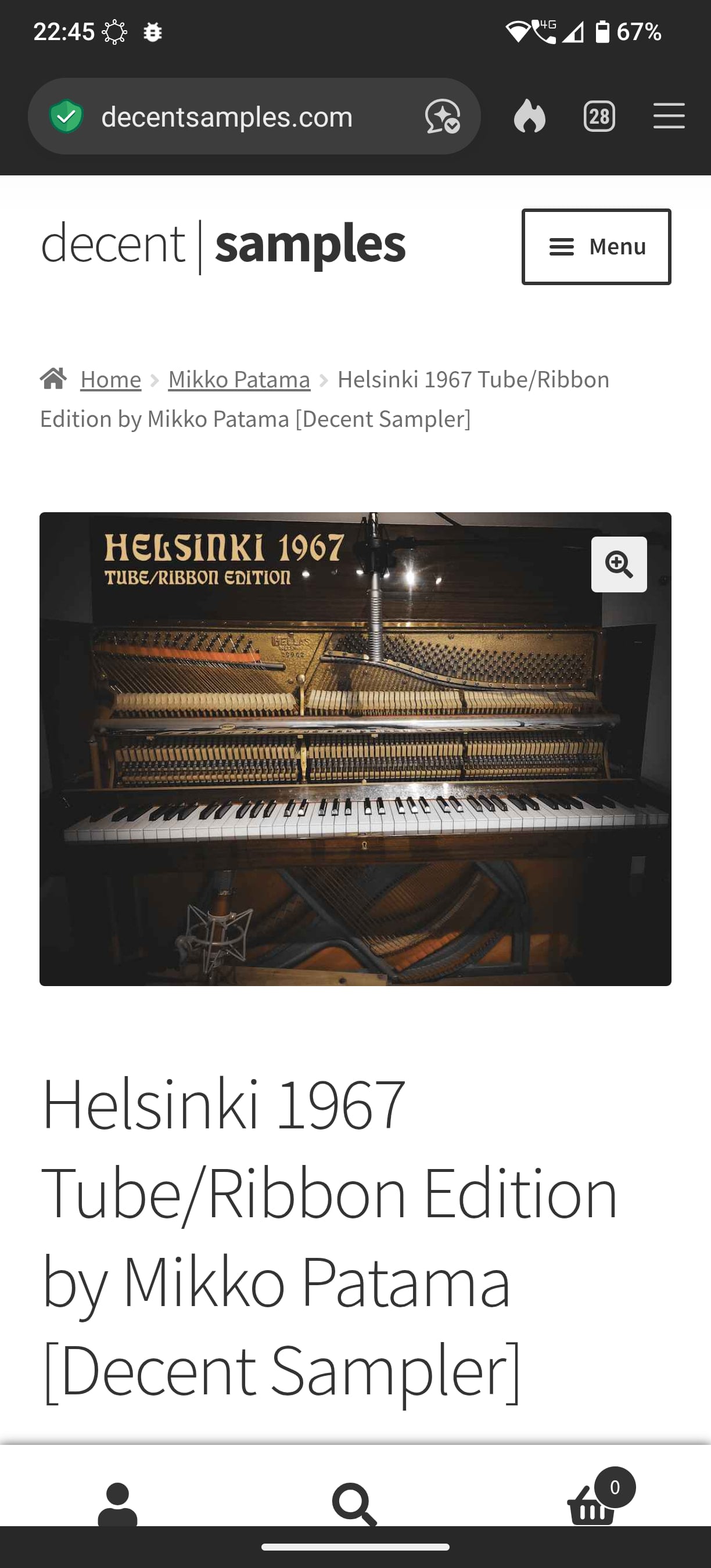
Decent Sampler
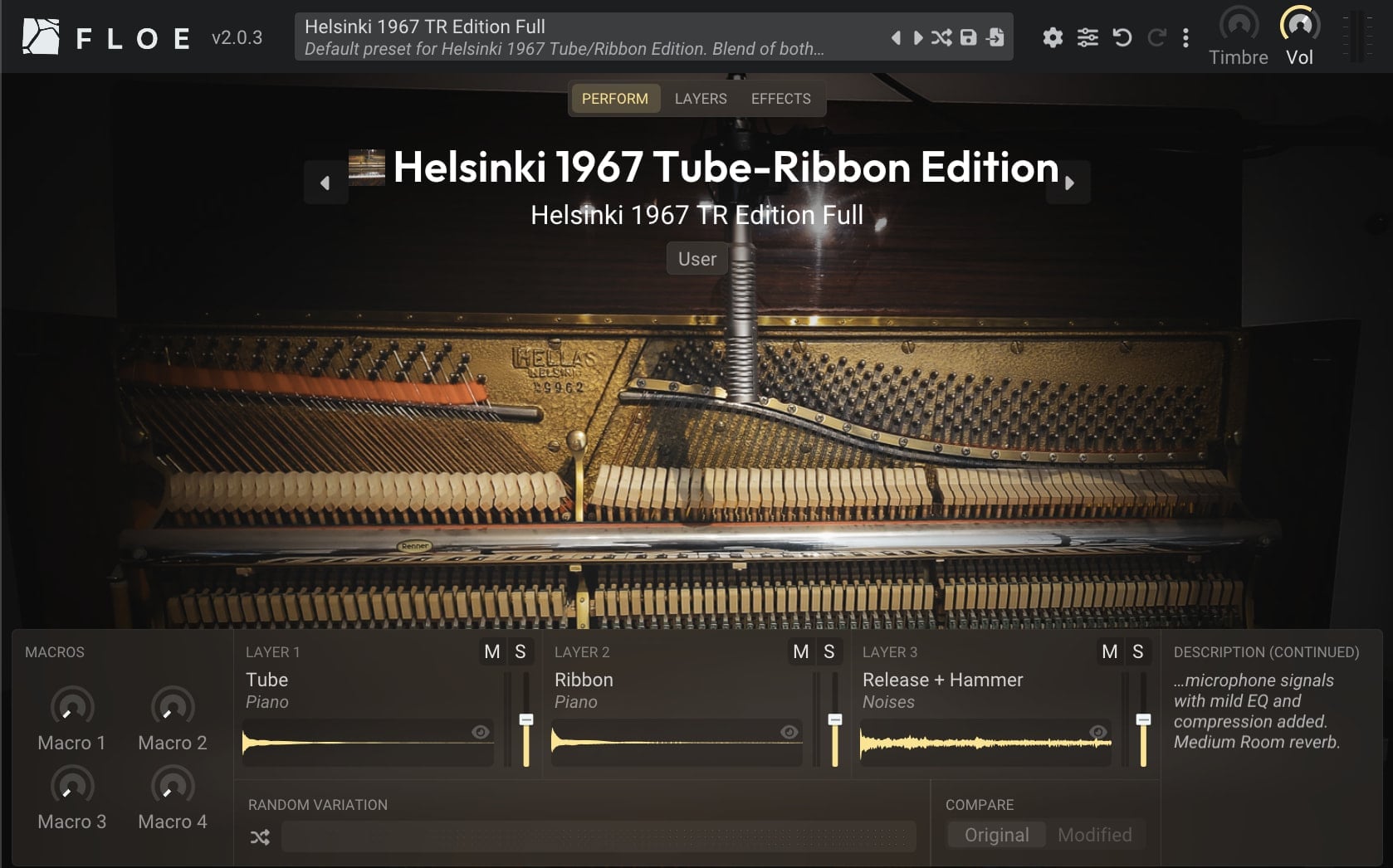
Floe
Ableton Sampler
Logic Pro Sampler.
*Full version of Kontakt is required, in Kontakt Player the instrument will run in demo mode!
I sincerely hope you enjoy this new version of the library.
Let me know if you’ve tried it in Gig Performer, and especially in live context! I’m also eager to know immediately if you find any glaring bugs or suggestions.
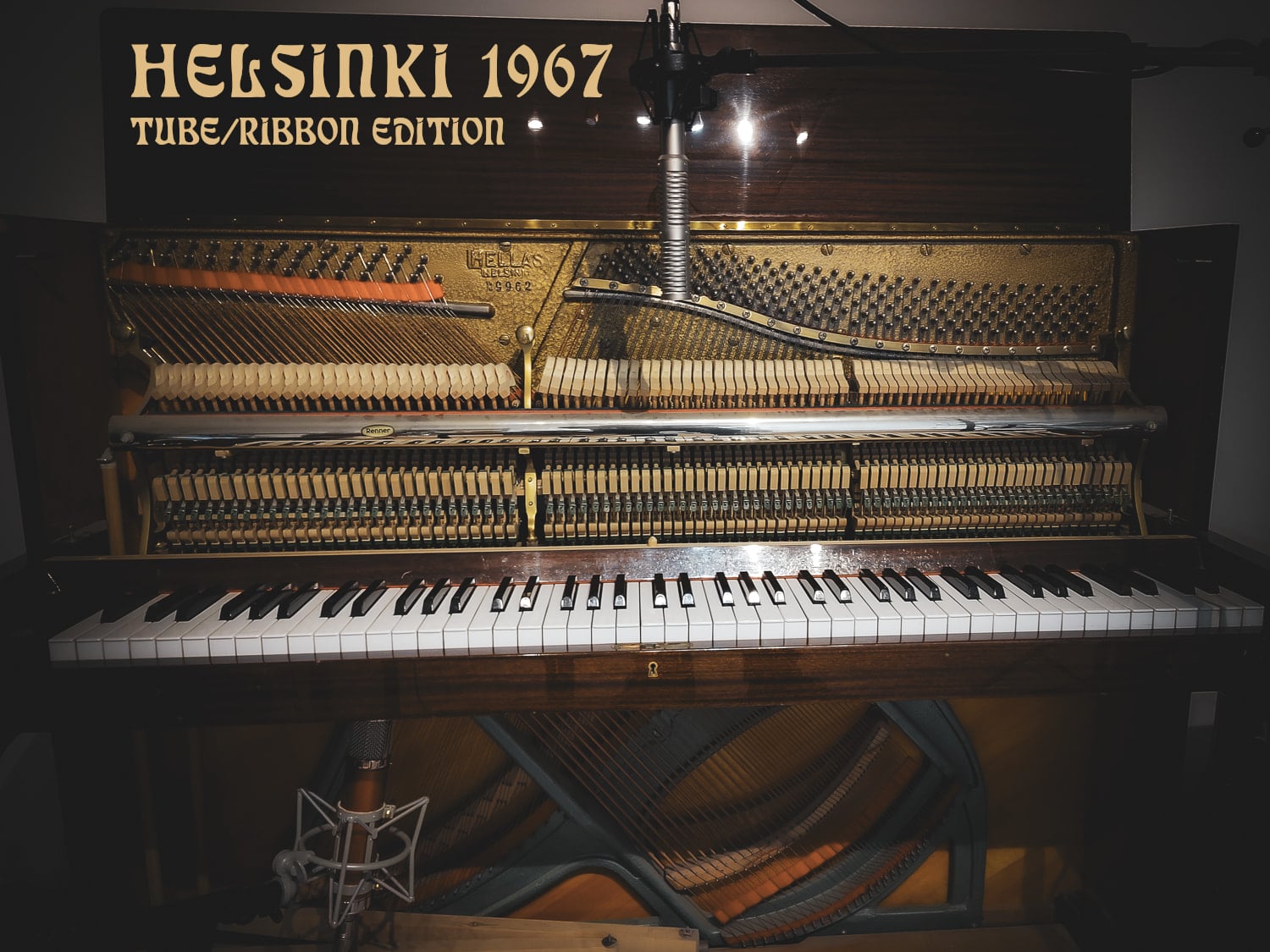
Up until the very late 1960s, in most popular music acoustic pianos were primarily recorded in mono with two possible microphone types: passive ribbon mics or tube condenser mics (altough stereo recording was developed since 1930s and was already common in classical recordings). Listen to any Beatles album, classic Blue Note jazz records or Glenn Gould’s original 1955 Goldberg Variations; all recorded in mono, and sounding great. Choosing to record piano in mono is still popular among seasoned engineers for many reasons: a well recorded mono piano track is often much easier to make sit in a busy production, and adding some ambience with stereo reverbs will give just enough width and breathing room for the piano to sound natural.**
**So I set out to experimenting with various different positions for just one mic, first comparing a bunch of different condensers to find the one that would emphasize the right things in this particular instrument. The sweet spot was at shin height, a cardioid mic pointed at the string crossover point from the left side of the piano. I propably spent more hours looking for this spot than I spent recording all the samples in the old Helsinki 1967 library (on which I used maybe an hour for mic placement…)!
But after finding that golden placement for my condenser, I also wanted to experiment with a newly acquired stereo ribbon microphone. Alan Blumlein, the godfather of stereo recording, experimented with stereo ribbon mics as early as in the 1930s, placing two ribbon capsules in what is nowadays known as the Blumlein array. Blumlein array captures a very wide and natural stereo image with lots of room reflections included, making it crucially important to have either very nice sounding acoustics or, as in my situation, a rehearsal space that is treated to sound “dry”.
The sampled piano has very worn-out hammers especially in the mid-register, making the attack almost tacky; some like it, I personally don’t. But turns out ribbon mics soften the attack just the ideal amount, so I could place the mic in player position relatively close to the hammers and still get a very balanced and pleasing sound!