Hey, all! I’m Lee Sebel, Online Education Coordinator and resident synth geek for the Bob Moog Foundation.
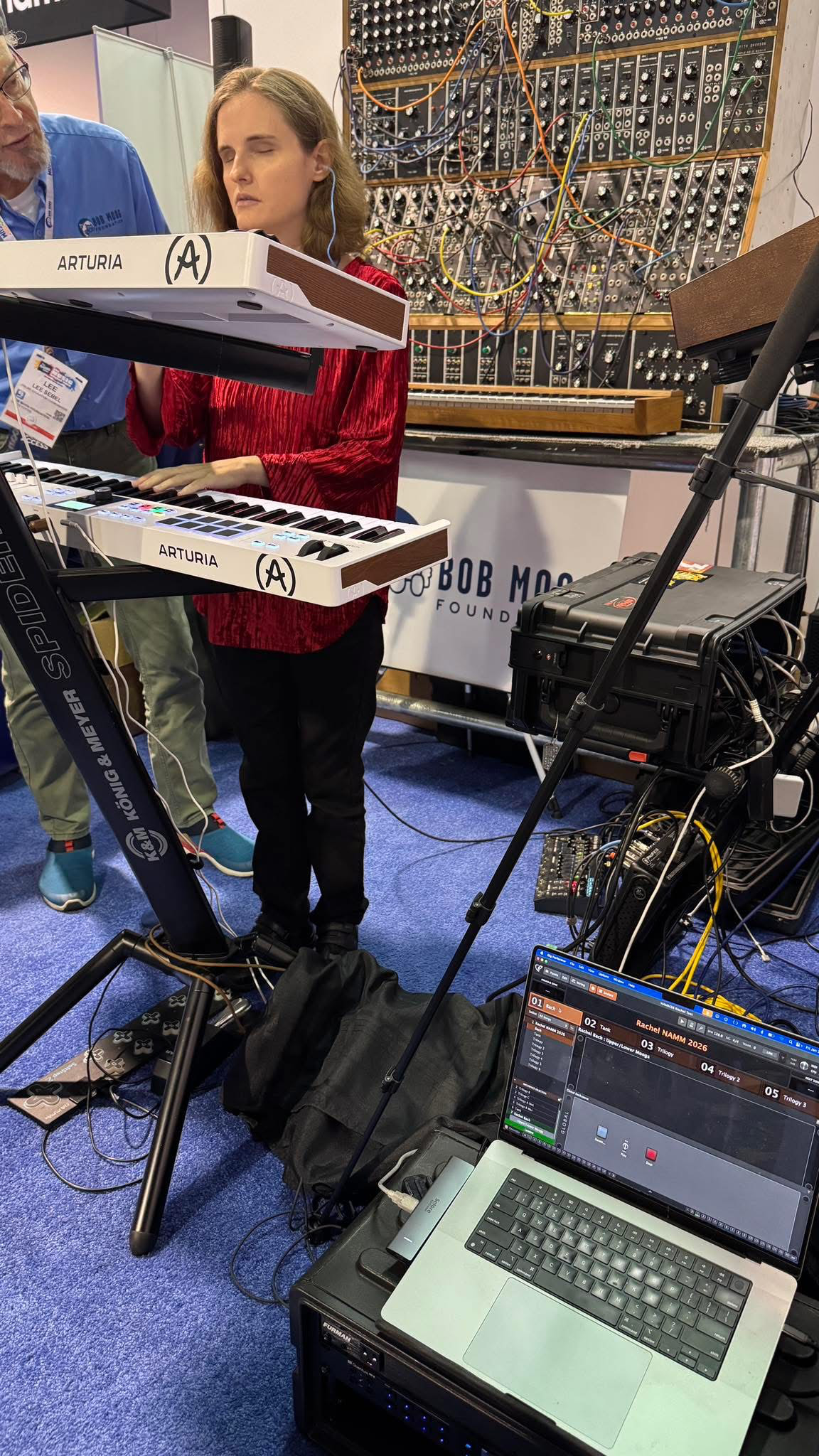
As the Foundation’s music director this year, I thought I’d pop in and take the opportunity to fill everyone in on the details behind BMF’s NAMM 2026 presentation, and send my big thanks to David and Brett for their offsite support, and Tim for his onsite support and impeccable timing. Things were down to the wire in advance of Rachel’s first performance on Thursday, but things went almost exactly as planned*
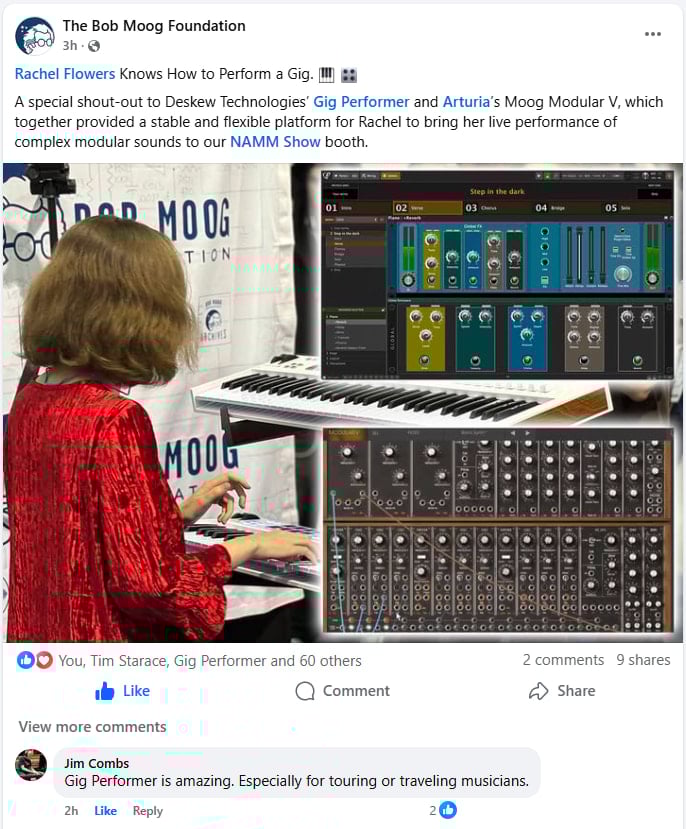
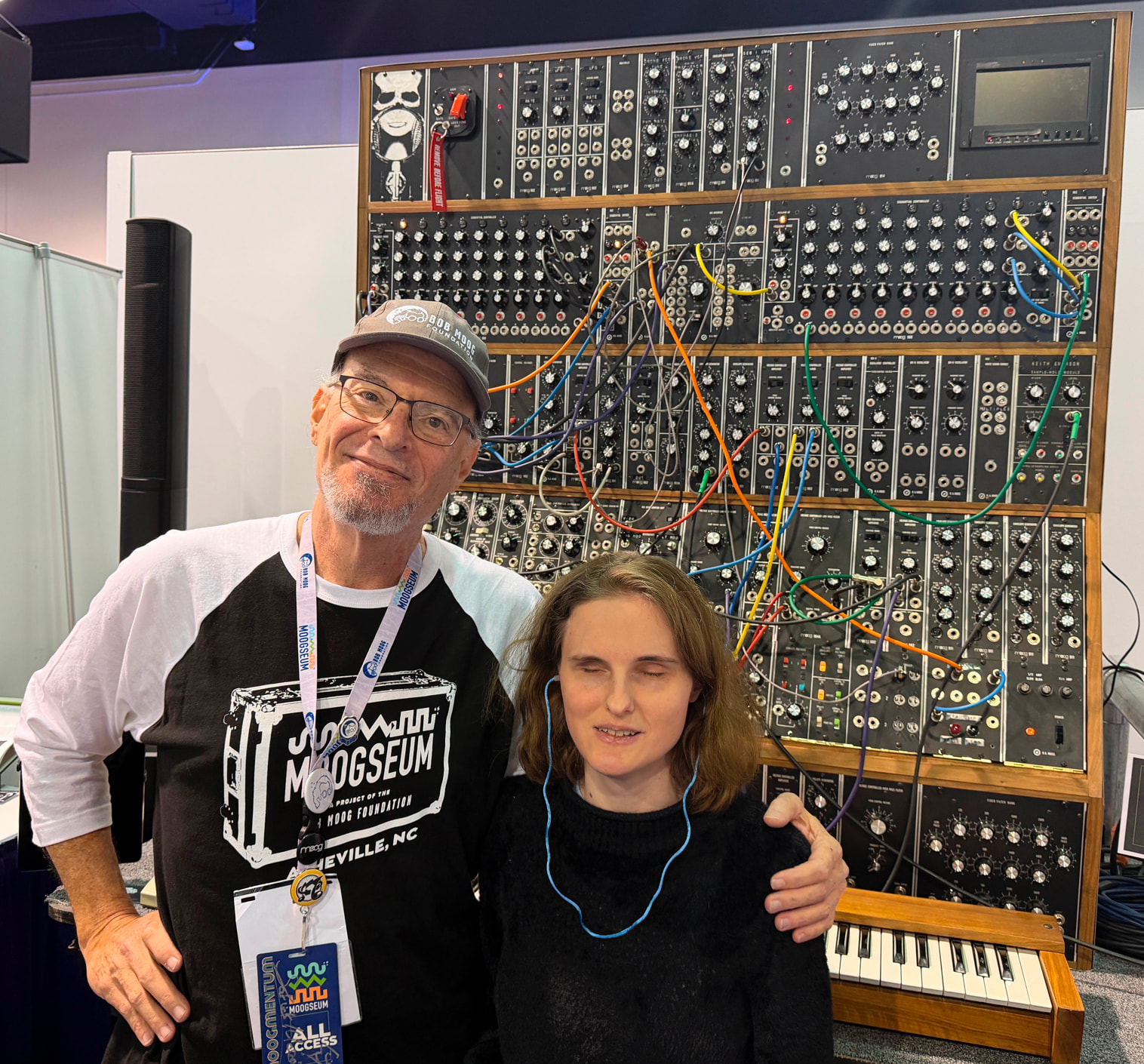
Initially GP’s role was not going be as extensive, as I was expecting the Emerson reissue prototype being displayed to be fully functional for the artists we had lined up.
Upon learning it was totally dead some 10 days before the show, I had to instantly pivot and put together a sound set for Rachel’s performances. Instead of having a single Arturia controller underneath the modular’s keyboard to drive GP, I had to go with a couple for all our performers to use over the weekend. Luckily, thanks to the efforts of 4 industry heavyweights, we were able to get a good chunk of that beast up and running, to the point where it was included in some of our performances.
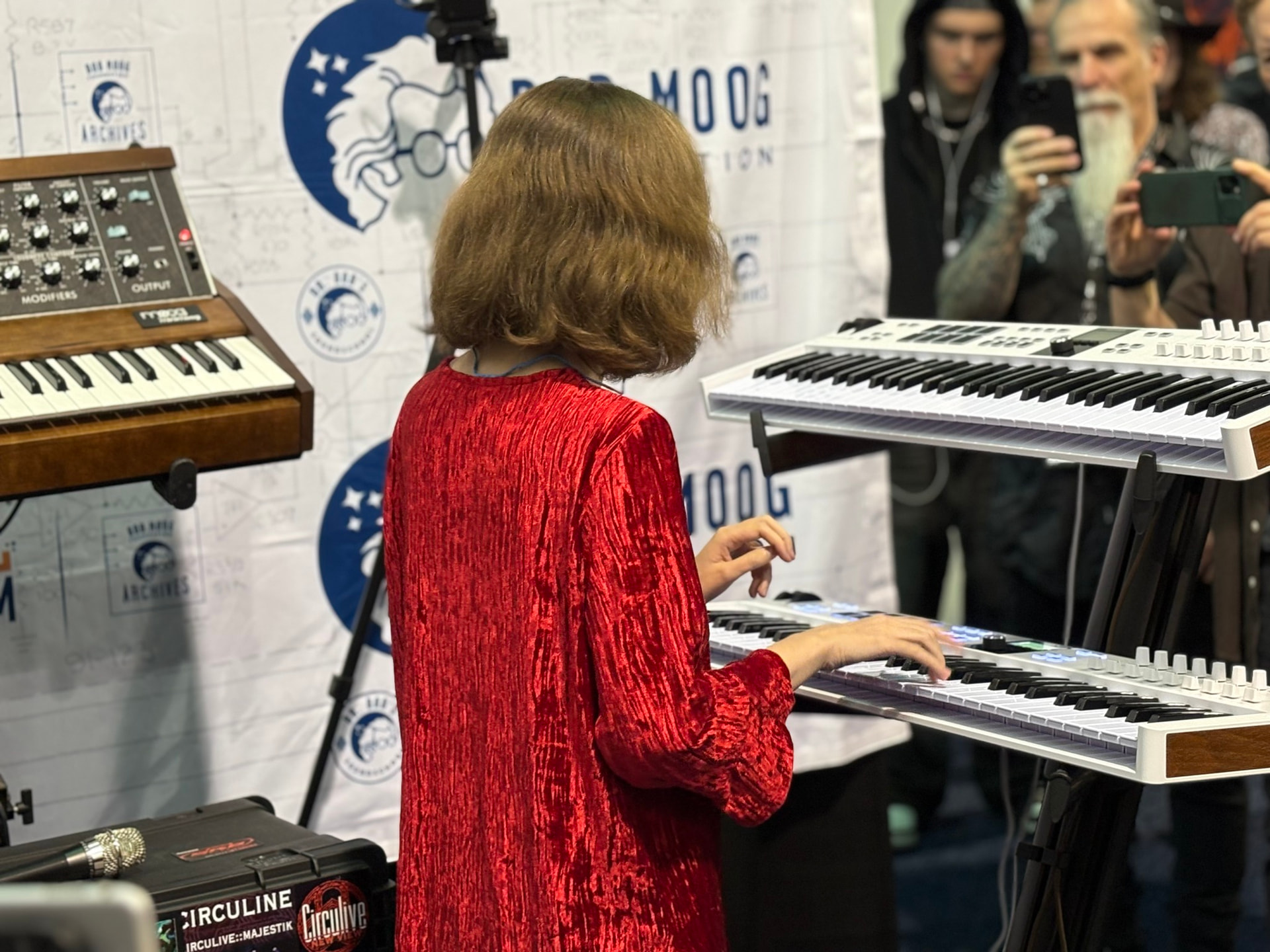
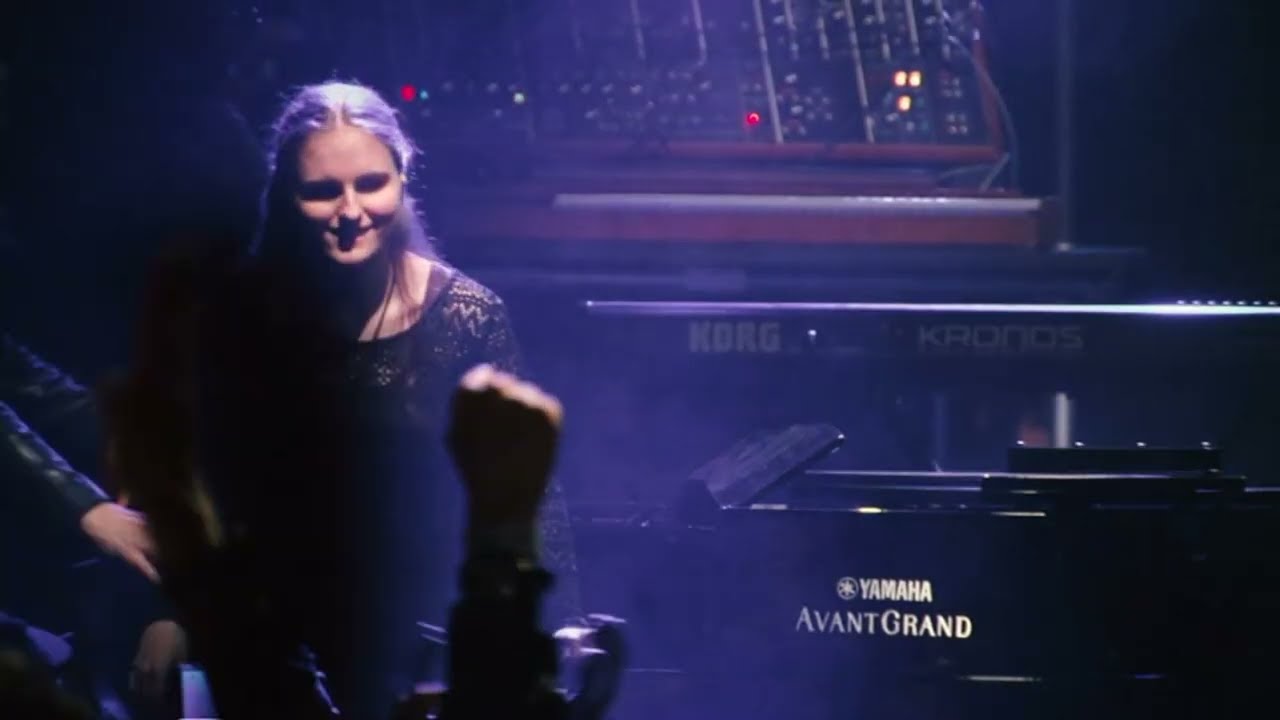
Rachel opened with Bach Invention #8, without having checked the sounds I created for her, and apparently they were acceptable as she never commented about them.
She prepared her own backing tracks for both “Tank” and “Trilogy”. The former only required one sound, so that was simple enough. The latter involved a total of 5 rack spaces changed with marker actions: 3 different sounds, with wet versions of 2 of them. Even after some fiddling I didn’t get one of them timed quite right, but the impact was minimal.
When I sent the sound set for Rachel’s approval, her comment was, “You’re close…”, so I went back and did a bit more tweaking. She did note on Friday they were not exactly like the album, but I’m pretty happy with what I was able to do in the time I had.
I relied on Arturia’s Modular V3 for everything but the third sound for “Trilogy”. There’s a little pitch “blip” on the album version and rather than spend time I didn’t have mucking around with Modular, I took a few seconds setting up exactly what I needed on their Jupiter 8V and mixed it in.
Initially I was going to let Rachel run her set with the Arturia KeyLab transport buttons, but we did not have enough prep time, so I took over that task and microphone management between tunes for her performances. The only controller I had to set up for her was the first slider changing portamento time for one of the “Trilogy” sounds.
It was a singular experience working with such a rare and gifted artist, and I’m hoping we’ll have the opportunity to do it again for NAMM ‘27.
Provided we can secure the budget, we’ll be celebrating the 25th anniversary of the Minimoog Voyager, Bob’s last synth design. We’ll have 3 or 4 different versions live on stage, and GP will again be a major part of the proceedings. In addition to running backing tracks and sending program changes, l’ll also be using it for FX on all the synths’ stereo outs, and to host plug-ins for polyphonic sounds played via the Voyagers’ MIDI Outs as needed.
In closing, this endeavor would wind up proving GP’s superiority over MainStage in case anyone still needs proof. We presented 6 performances by Andrew Colyer and Robert Berry, playing a 15-minute medley of songs from 3 and 3.2. And we had Jonathan Sindleman and Reek Havok play a couple of sets.
Both keyboardists use MainStage for their live performances, and the plan was for them to run their own backing tracks on their own rigs, because MS is supposed to be able to do that. But of course it can’t while also dealing with the required sound management tasks.
So I ended up running backing tracks while recording the stereo mix over USB on some cheap DAW I found in a pinch. We had 3 cams going, so be on the lookout for what should be a cool video of the set from Andrew and Robert.